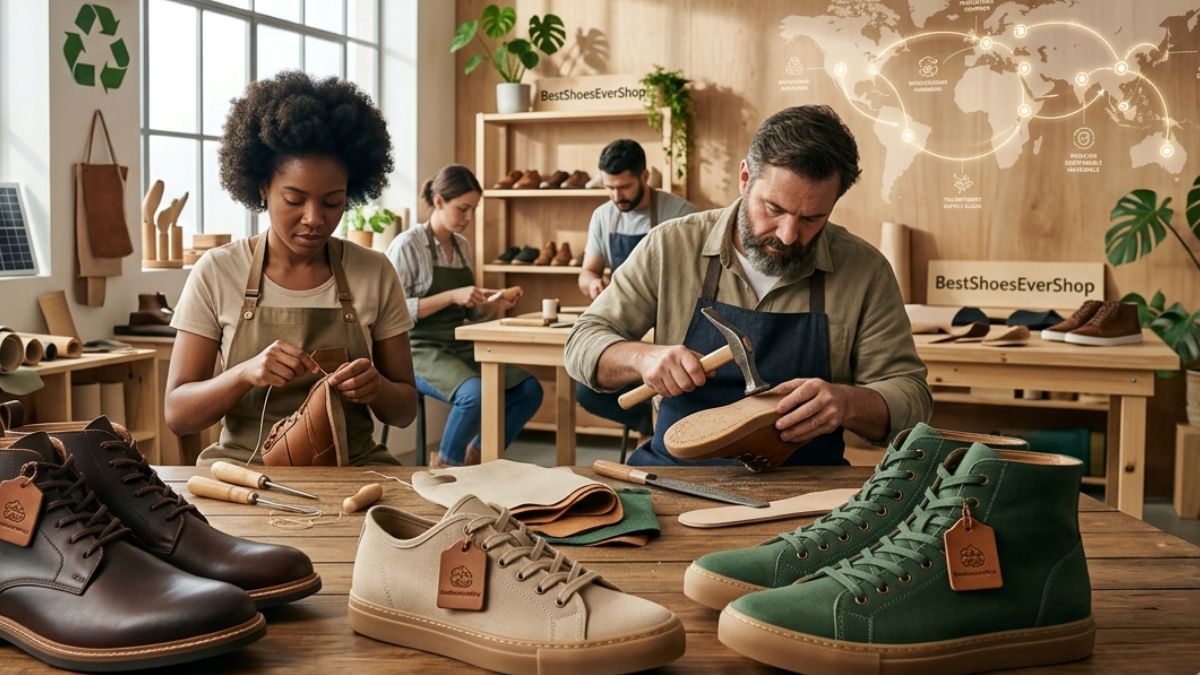
Every pair of shoes tells a story not just about style, but about the hands that made them, the land that grew the materials, and the air those factories breathe into the world. At BestShoesEverShop, that story is one of accountability. In an industry where nearly 22 billion pairs of shoes end up in landfills each year, and the average running shoe generates 13.6 kg of CO₂ emissions, choosing a brand rooted in ethical manufacturing isn’t a luxury; it’s a responsibility.
This guide pulls back the curtain on how sustainable shoes are actually made: the materials, the methods, the certifications, and the factory standards that separate genuine eco-conscious production from green-washed marketing.
What Does “Ethical Shoe Manufacturing” Actually Mean?
The term gets thrown around loosely in fashion marketing, but ethical shoe manufacturing rests on three concrete pillars:
- People: Fair wages, safe working conditions, reasonable hours, and no forced or child labor anywhere in the supply chain.
- Planet: Eco-friendly raw materials, low-carbon production processes, renewable energy use, and waste reduction at every stage.
- Transparency: Third-party audits, open factory lists, traceable sourcing, and honest communication about what a brand is still working to improve.
A shoe brand that checks only one or two of these boxes is not fully ethical. At BestShoesEverShop, all three form the foundation of how every product is designed and delivered.
The Sustainable Materials Revolution in Footwear
Moving Beyond Petroleum-Based Synthetics
Traditional shoe manufacturing relies heavily on petroleum-derived materials, such as PVC, polyurethane, and synthetic rubber. These materials are energy-intensive to produce, difficult to recycle, and persist in landfills for centuries. The sustainable footwear movement is replacing them with a new generation of smarter alternatives.
Here is a breakdown of the most impactful eco-friendly materials that designers use in modern ethical shoe production:
| Material | Source | Key Benefit | Certification to Look For |
|---|---|---|---|
| Organic Cotton Canvas | Non-GMO cotton farms | Uses 91% less water than conventional cotton | GOTS (Global Organic Textile Standard) |
| Recycled PET (rPET) | Post-consumer plastic bottles | Diverts plastic from oceans and landfills | GRS (Global Recycled Standard) |
| Vegetable-Tanned Leather | Oak/chestnut bark tannins | Biodegradable, no toxic chromium | Leather Working Group (LWG) Gold |
| Natural Rubber | Sustainably tapped trees | Biodegradable flexible soles | FSC Certified |
| Cork | Harvested bark (tree lives) | Renewable, antimicrobial, shock-absorbing | FSC or PEFC Certified |
| Hemp | Low-water crop, no pesticides | Naturally antimicrobial, very durable | GOTS or organic certification |
| Mushroom Leather (Mycelium) | Fungal root networks | Biodegradable, cruelty-free | Brand-level transparency |
| Bio-based EVA | Sugarcane-derived foam | Carbon-negative midsole alternative | Brand disclosure + third-party lab testing |
How Sustainable Shoes Are Made: Step by Step
Step 1: Responsible Raw Material Sourcing
The sustainability journey starts long before a shoe takes shape. Ethical manufacturers audit their material suppliers for environmental compliance, labor standards, and traceability. Many now use blockchain or digital labeling systems to map a shoe’s entire lifecycle from raw material origin to factory floor to retail shelf.
At BestShoesEverShop, no material enters production without a verified sourcing story. That means you need to know which farm grew the cotton, which tannery processed the leather, and what percentage of the rubber is FSC-certified.
Step 2: Low-Waste Pattern Cutting
Traditional shoe cutting generates significant scrap waste. Sustainable factories combat this with:
- Smart nesting software that arranges cutting patterns digitally to minimize material offcuts
- 3D knitting technology that creates uppers in a single continuous process with virtually zero fabric waste
- Laser cutting for precision with reduced error rates and less rework
Step 3: Non-Toxic Assembly and Adhesives
Conventional shoe assembly uses solvent-based adhesives that release volatile organic compounds (VOCs), harmful to factory workers and the atmosphere. Ethical manufacturers switch to water-based cements and natural adhesives that are safer for both workers and indoor air quality. The difference matters enormously for the artisans spending eight hours a day in those factories.
Step 4: Renewable-Energy-Powered Factories
Leading sustainable shoe factories are installing solar panels, using heat-recovery systems, and implementing closed-loop water recycling for finishing and cleaning processes. ISO 14001-aligned environmental management systems track energy consumption and drive continuous improvement. Some factories in Portugal and Italy have already achieved near-zero-waste production status.
Step 5: Fair Labor Practices on the Factory Floor
A truly ethical shoe factory follows internationally recognized labor norms:
- Maximum 8-hour workday / 40-hour workweek with fair overtime pay
- At least two rest days per week
- Safe ventilation, proper protective equipment, and injury insurance
- Living wages that meet or exceed local legal standards
- No subcontracting to unaudited facilities
BestShoesEverShop conducts regular third-party factory audits and publishes findings annually as part of its commitment to supply chain transparency.
Step 6: Circular Design and End-of-Life Planning
Truly sustainable shoes are designed with their death in mind. This means:
- Goodyear-welted or Blake-stitched constructions that allow resoling instead of disposal
- Mono-material components (where possible) that simplify recycling
- Take-back and repair programs that extend product life
- Biodegradable or compostable elements that minimize landfill impact
Key Certifications
Certifications are your shortcut past greenwashing. Here are the ones that carry real weight:
- B Corp Certification: Rigorous assessment of environmental and social performance across the entire business
- Fair Trade Certified: Ensures workers are paid fairly and have safe conditions
- GOTS (Global Organic Textile Standard): Covers the full supply chain for organic textile materials
- Leather Working Group (LWG) Gold: Rates tanneries on water use, chemical management, and traceability
- OEKO-TEX Standard 100: Tests finished textiles for harmful substances
- Global Recycled Standard (GRS): Verifies the recycled content claim on rPET and similar materials
- Bluesign: Certifies safe chemical use and resource efficiency in textile production
- Cradle to Cradle (C2C): Indicates products designed for safe recycling or composting
What Makes BestShoesEverShop Different
Many brands market sustainability as an add-on. At BestShoesEverShop, the team embeds ethical manufacturing in product development from the first sketch. That means:
- The team evaluates every new material for environmental impact before it enters the supply chain.
- They select factory partners based on labor compliance records, not just price.
- Retailers sell repair kits alongside every shoe purchase to extend product life.
- Annual transparency reports cover carbon data, factory conditions, and progress toward sustainability targets
This isn’t about being perfect. It’s about being honest, improving consistently, and giving consumers the information they need to make genuinely informed choices.
How to Spot Greenwashing When Shoe Shopping
Not every “eco-friendly” shoe is what it claims to be. Watch for these red flags:
- Vague language like “conscious collection” or “green materials” with no specifics
- No third-party certifications listed
- No factory information or supplier list has been published
- Claims of 100% sustainability with no data to support it
- Recycled content claims with no GRS or equivalent verification
Genuine sustainable brands are specific. They name their certifications, name their factories, and share data, including the areas where they haven’t yet achieved their goals.
Conclusion
Sustainable shoe manufacturing is not a trend; it’s the direction the entire footwear industry is moving, driven by consumers who have stopped tolerating vague green promises. At BestShoesEverShop, ethical manufacturing means traceable materials, transparent factories, fair-paid artisans, and products designed to outlast the cheap alternatives by years.
Every time you choose a shoe made the right way, you vote for a supply chain that respects both the people who made it and the planet that provided the materials. That’s not a small thing. It’s the entire point.
Frequently Asked Questions (FAQs)
Are sustainable shoes more expensive?
Yes, typically, but manufacturers often design them to last longer and to be repaired rather than replaced, resulting in a lower lifetime cost.
Is vegetable-tanned leather really eco-friendly?
Yes, when sourced from LWG Gold-certified tanneries, it’s biodegradable and produced without toxic chromium chemicals, making it one of the more sustainable leather options.
What certifications should I look for when buying ethical shoes?
Look for B Corp, Fair Trade, GOTS, GRS, Leather Working Group Gold, and OEKO-TEX Standard 100; these are third-party verified and cover both environmental and labor standards.
Are vegan shoes always more sustainable than leather shoes?
Not automatically. Petroleum-based materials make PVC and PU synthetic leathers hard to recycle. Plant-based vegan leathers (pineapple, mushroom, corn fiber) are genuinely eco-friendly alternatives.
How do I know a brand’s sustainability claims are real?
Look for published factory lists, third-party audit reports, specific certifications with verifiable badge numbers, and annual impact reports that include both achievements and shortcomings.
What is a circular shoe design?
The designers create the shoe for repair, resoling, or recycling, which reduces waste by extending the product’s useful life instead of sending it to a landfill after a season.
Can shoes be 100% biodegradable?
Manufacturers make some using natural rubber, cork, vegetable-tanned leather, and organic cotton. Full biodegradability across all components remains a work in progress for most brands.