When a project goes wrong, the budget usually starts bleeding long before anyone notices. A water leak spreads. A fire eats into the finishes and framing. A collision with a utility line forces repair. The real cost is not only the damaged material. It is the time spent figuring out what was affected, what still needs to be bought, and who is going to approve the work. That is why contractors are increasingly tying model data to damage estimates. The payoff is not abstract. It shows up in faster scoping, cleaner pricing, fewer arguments, and less waste. Recent BIM case-study research found that model-based workflows can reduce design errors by 50–60%, construction waste by 4.3–15.2%, rework costs by 40–50%, change orders by 32%, and time spent on routine tasks by as much as 80% in the projects reviewed.
Why does damage work need a better starting point?
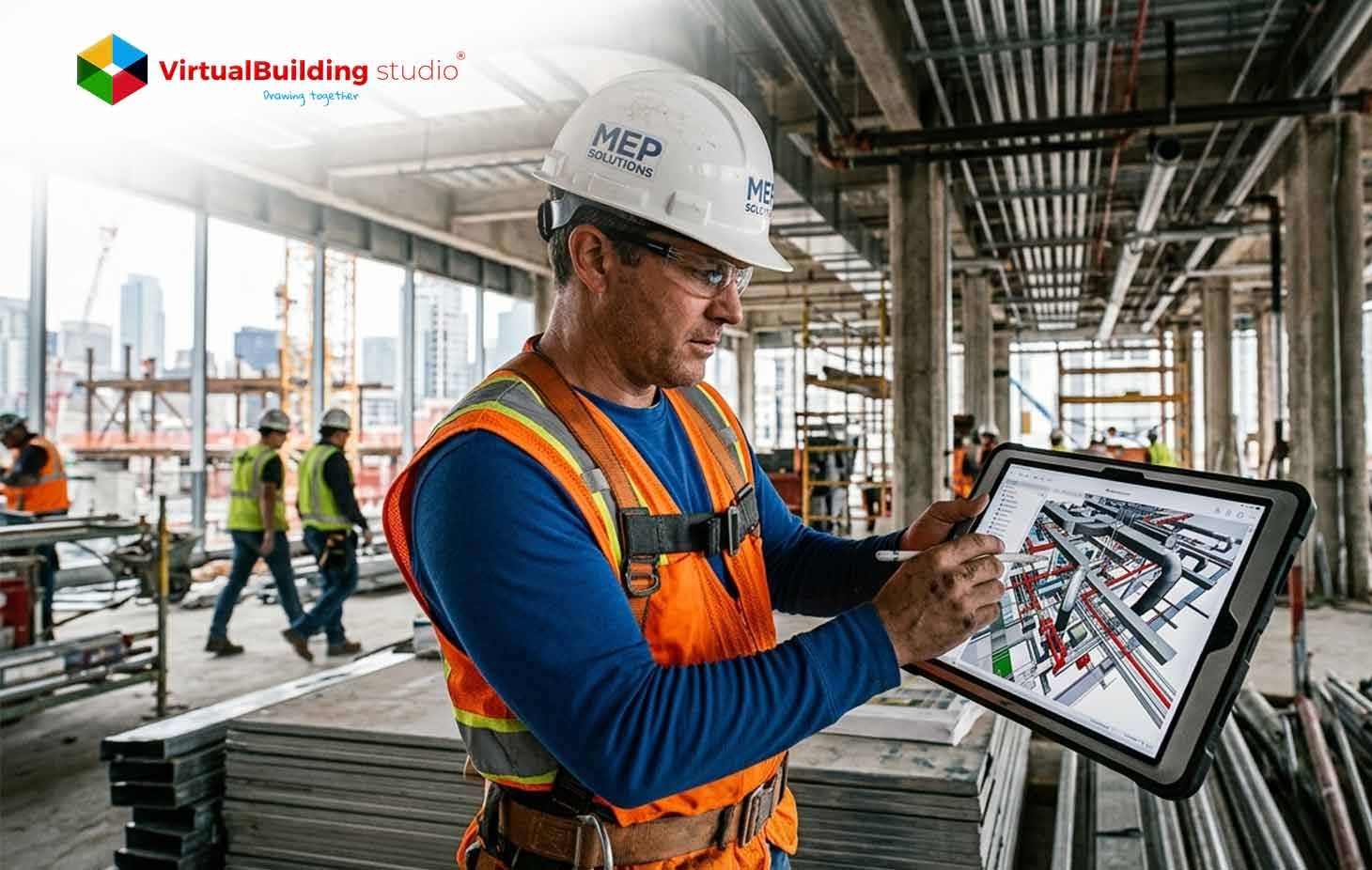
This is where BIM Modeling Service matters most. A model gives contractors something drawings usually do not: a measurable record of the building as a system. Walls are not just lines. Floors are not just surfaces. Mechanical, electrical, and finish elements are not just assumptions in a spreadsheet. They are objects with geometry, relationships, and quantities that can be checked. BIM-based quantity takeoff research keeps repeating the same point: if the model is structured well, the quantity data becomes faster to extract and more reliable to price. If the model is messy, the errors carry straight into the estimate.
For damage work, that matters even more because the scope is often hidden at first. A leak that looks small on the surface may mean insulation replacement, drywall removal, baseboard replacement, paint blending, and cleanup that nobody saw on day one. A scan-to-BIM approach can improve measurement accuracy and automate data extraction and analysis, which helps contractors document existing conditions before or after demolition and avoid building an estimate on guesswork.
What contractors gain when the model comes first
- Cleaner damage scope from the start
- Fewer missed quantities during repair pricing
- Better support for insurance and owner review
- Less rework when the damage expands beyond the first visible area
- Faster decisions on whether to repair, replace, or phase out the work
What a good damage model actually does
A useful model is not there for decoration. It is there to answer practical questions. How much drywall is affected? Which rooms are touched by moisture? How much ceiling grid must be removed? What finish layers are damaged, and what can stay? If the model is tied to measured spaces and objects, the contractor can identify the damaged scope in a way that is easier to defend later. That also helps when the job is split across trades. The framing crew needs one picture. The drywaller needs another. The estimator needs a third. The model gives them all the same backbone.
There is also a quality-control side to this. Research on BIM-based quantity takeoff says the accuracy of the output depends heavily on model completeness, geometry quality, and parameter consistency. In other words, the model must be built carefully if it is going to help with cost control. Poorly modeled walls, incomplete material definitions, and inconsistent naming can produce takeoff errors that are large enough to affect the budget.
Model-led damage workflow
| Step | What the model provides | Why does it help contractors |
| Field capture | Photos, scan data, room geometry | Faster scope confirmation |
| Model validation | Measurable surfaces and damaged assemblies | Reduces missed items |
| Quantity extraction | Areas, lengths, counts, volumes | More defensible pricing |
| Repair mapping | What is removed, what is repaired, what stays | Cleaner trade coordination |
| Update cycle | Revised quantities after demo or discovery | Less rework and fewer surprises |
That workflow may sound basic, but it saves money in several places at once. It reduces the chance that a crew gets sent to replace material that was never affected. It prevents a spreadsheet from pricing a room once when it really needed to be measured twice. Also, it gives the contractor a cleaner record when the owner asks why the number changed after the demo.
Turning measurements into budgets that hold up
A model gives counts. It does not give a budget by itself. That is where Construction Estimating Services come in. Estimating is the work of converting quantity into cost by adding labor, equipment, indirect costs, access difficulty, site constraints, and production rates. Procore describes construction estimating as the process of calculating all required direct and indirect costs for a project, including materials, labor, equipment, overhead, and other expenses. That definition matters because damaged work is rarely simple. Restoration and repair jobs often involve staging, occupied-space work, temporary protection, and fast sequencing that changes the labor picture completely.
A good estimator does more than price numbers. They translate the model into how the job will actually be built. If 1,200 square feet of drywall must be replaced, the estimator needs to think about demo labor, waste, material delivery, joint treatment, sanding, paint blending, and cleanup. If the project is in a tight commercial corridor, productivity will not match a clean new-build floor plate. That is where the value of an experienced estimator shows up. They can take the measured scope and build a realistic cost plan around it.
Simple repair-cost example
Illustrative example only.
| Line item | Quantity | Unit rate | Extended cost |
| Drywall replacement | 1,200 sq ft | $3.10 | $3,720 |
| Baseboard replacement | 240 lf | $2.40 | $576 |
| Prime and paint | 1,200 sq ft | $1.25 | $1,500 |
| Cleanup and disposal | 1 lot | $420 | $420 |
| Contingency for hidden damage | 8% | — | $498 |
| Estimated total | $6,714 |
That simple calculation is the reason contractors want more accurate inputs. If the quantity is off by even 10%, the entire repair budget shifts. On a bigger loss, the difference becomes more painful. The job becomes less predictable, the claim harder to defend, and the cash flow harder to manage.
The procurement benefit most people overlook
Once the damage scope is clear, procurement gets smarter. Contractors know what to order, when to order it, and how much to store. That reduces rush delivery fees, over-ordering, and material sitting on site too long. It also makes phasing easier. On a repair job, not every area needs to be opened at once. If the model shows the damaged zones clearly, the contractor can plan around occupied areas, business operations, or insurance limits.
That is a major gain for contractors because damaged work often gets lost in the shuffle between emergency response and final rebuild. With the model tied to quantities, procurement can follow the repair sequence instead of guessing at it.
Why structured claim output still matters
There is one more step before the work becomes really defensible. When a loss has to be reviewed by an adjuster, owner, or insurer, the estimate cannot just be “roughly right.” It needs a format people recognize. That is where Xactimate Estimating Company becomes valuable. Verisk describes Xactimate as property claims estimating software that is precise, fast, and flexible, and its pricing data services are backed by independently researched reconstruction pricing data. It is built for property claims and restoration work, where line-item structure and local pricing matter.
For contractors, that means the estimate can be read, checked, and approved without a long translation exercise. The model supplies the scope. The estimator prices the work. Xactimate gives the output a structure that the other side can review line by line. That matters when the work is tied to claims, restoration, or any job where the burden of proof is high.
Manual vs BIM-linked vs claim-ready process
| Process | Common problem | BIM-linked improvement | Business result |
| Manual scope review | Missed damaged items | Model-based verification | Fewer omissions |
| Manual takeoff | Repeated measuring and rechecking | Faster quantity extraction | Less estimator time spent on cleanup |
| Unstructured estimate | Hard to defend costs | Standardized line items | Faster approval cycles |
| Procurement guesswork | Over-ordering or late orders | Quantity tied to scope | Lower waste and less delay |
What contractors really gain here is control. Control over scope. Control over the estimate. Also, control over the conversation when the owner asks why the number looks the way it does.
A practical workflow that keeps the job honest
A simple workflow works best:
- Capture the damaged area and verify conditions in the field.
- Build or update the model so that damaged elements are measured correctly.
- Extract quantities and review them with the repair team.
- Price the repair through an estimator who understands site conditions.
- Package the estimate in a structured format for review and approval.
- Recheck the model after the demo if hidden damage is discovered.
That process is not fancy. It is disciplined. And discipline is what keeps damage work from becoming a guessing game.
Final thought
Contractors gain a lot when they connect BIM and damage estimates. They get better scope visibility, fewer surprises, more accurate pricing, and a cleaner approval path. The real advantage is not just speed. It is confidence. When BIM Modeling Services give the team a measurable scope, when Construction Estimating Services turn that scope into a realistic budget, and when Xactimate Estimating Services provide a review-ready format, the contractor is no longer fighting the damage with rough numbers. They are managing it with evidence.
FAQs
1. How does BIM help with damage estimates?
BIM helps by giving contractors measurable geometry and room data, so they can confirm what is damaged and what still needs to be priced. That reduces misses and makes the estimate easier to defend.
2. Why are estimators still needed if the model gives quantities?
Because quantities are not the same as cost. Construction Estimating Services add labor, access, equipment, indirect costs, and productivity assumptions so the repair budget reflects real site conditions.
3. When should Xactimate be used on damage jobs?
It is most useful when the repair needs a standardized, line-by-line format for an insurer, adjuster, or owner. Xactimate Estimating Services help make the estimate easier to review and approve.