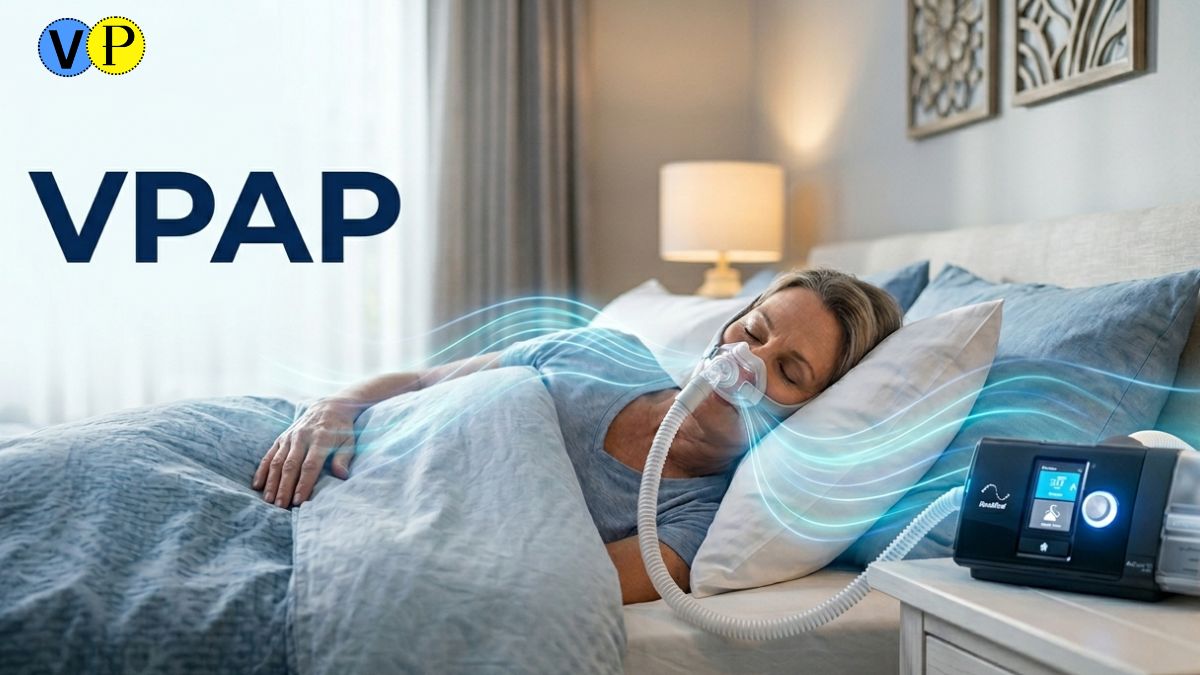
If you’ve been told a standard CPAP isn’t cutting it, or your doctor mentioned something called a “VPAP,” you’re not alone in feeling confused. VPAP machines are one of the most effective yet least talked about tools in sleep therapy. This guide breaks down exactly what a VPAP machine is, how it works, who needs it, and how to get the most out of it. No jargon overload, just clear answers.
What Is a VPAP Machine?
VPAP stands for Variable Positive Airway Pressure. It’s a bilevel breathing device, meaning it delivers two different air pressure levels: one higher pressure when you breathe in, and a lower pressure when you breathe out. This mirrors your natural breathing rhythm far more closely than a standard CPAP, which pushes a single fixed pressure all night long.
The term “VPAP” is a trademark of ResMed, the Australian medical device company that pioneered the technology. You’ll also hear it called BiPAP (Bilevel Positive Airway Pressure), which is the generic term used by other manufacturers for the same concept. Whether it says VPAP or BiPAP on the box, the core mechanism is the same.
VPAP vs. CPAP vs. APAP: What’s the Difference?
| Feature | CPAP | APAP | VPAP (BiPAP) |
|---|---|---|---|
| Pressure Type | Single fixed pressure | Auto-adjusting single pressure | Two levels (IPAP + EPAP) |
| Inhalation Support | Yes | Yes | Yes (higher pressure) |
| Exhalation Comfort | No adjustment | Slight adjustment | Yes (lower pressure) |
| Tracks Breathing Patterns | No | Yes | Yes (advanced models) |
| Best For | Mild–moderate OSA | Mild–moderate OSA | Moderate–severe apnea, COPD, CSA |
| Customization | Low | Moderate | High |
| Typical Cost | Lower | Moderate | Higher |
The key takeaway: VPAP is not a replacement for CPAP; it’s a step up, designed for people with more complex needs or those who struggle with CPAP’s constant pressure.
How Does a VPAP Machine Work?
Inside every VPAP device are pressure and flow sensors that continuously monitor your breathing in real time. Here’s what happens breath by breath:
- You begin to inhale. The machine detects the start of airflow and instantly increases pressure to the IPAP (Inspiratory Positive Airway Pressure) level. This higher pressure splints your airway open, prevents collapse, and reduces the effort your lungs need to expand.
- You begin to exhale. The sensor detects the reversal in airflow and drops pressure to the EPAP (Expiratory Positive Airway Pressure) level. This lower pressure still keeps your airway from collapsing but makes it far easier to breathe out, unlike CPAP, where you’re always exhaling against full pressure.
- The cycle repeats all night, automatically, without you thinking about it.
The gap between IPAP and EPAP is called Pressure Support (PS). A larger PS gap means more ventilation assistance, useful for people with weaker respiratory muscles or CO2 retention issues.
The Three Operating Modes Explained
VPAP machines offer multiple modes, which your doctor will select based on your diagnosis:
S (Spontaneous) Mode: The machine responds to your own breathing effort. When you try to inhale, it switches to IPAP. When you exhale, it drops to EPAP. This is the most common mode and feels the most natural. Recommended for obstructive sleep apnea (OSA).
T (Timed) Mode: The machine cycles between IPAP and EPAP on a fixed schedule set by your clinician, measured in breaths per minute (BPM). It doesn’t wait for you to breathe. This is used when a patient cannot reliably trigger the machine, such as in certain neurological conditions.
ST (Spontaneous/Timed) Mode: This is the safety net mode. It responds to your breathing like S mode, but if your breath rate drops below a clinician-set minimum, the machine steps in and delivers a backup breath. This is often prescribed for central sleep apnea (CSA), where the brain occasionally “forgets” to send the signal to breathe.
Who Needs a VPAP Machine?
A VPAP isn’t prescribed to everyone. It’s recommended when simpler therapies aren’t enough, or when a condition requires two-level pressure support. Common candidates include:
- People who failed CPAP therapy due to discomfort when exhaling against constant pressure
- Those diagnosed with Central Sleep Apnea (CSA), where breathing interruptions originate in the brain, not the airway
- Patients with Obstructive Sleep Apnea (OSA) require higher pressure settings
- People with COPD (Chronic Obstructive Pulmonary Disease) or chronic respiratory insufficiency
- Those with Obesity Hypoventilation Syndrome (OHS), where excess weight impairs breathing during sleep
- Patients with neuromuscular diseases such as ALS or muscular dystrophy that weaken breathing muscles
- People experiencing hypercapnia (excess CO2 in the blood) who need ventilation support
Important: VPAP therapy requires a prescription. It must be set up and titrated (pressure-adjusted) by a licensed clinician, ideally following an in-lab sleep study or an at-home test reviewed by a sleep specialist.
Types of VPAP Machines (ResMed Models)
ResMed markets several VPAP variants under their AirCurve 10 series, each built for a slightly different clinical need:
VPAP S: Basic bilevel device with spontaneous mode. Good for OSA patients who need dual pressure but don’t require a backup breathing rate.
VPAP ST: Adds spontaneous/timed mode with backup rate. Used for CSA, COPD, and OHS patients.
VPAP Auto / iVAPS: Intelligent Volume-Assured Pressure Support. Automatically adjusts pressure to maintain a target tidal volume (the amount of air per breath). Ideal for patients with changing respiratory needs throughout the night.
VPAP ST-A: A non-invasive ventilator for more serious respiratory failure, featuring advanced alarm systems and clinical monitoring tools.
Setting Up Your VPAP Machine: Step-by-Step
Getting started with a VPAP doesn’t have to be overwhelming. Here’s a general setup process (always follow the instructions that came with your specific device):
- Place the machine on a stable, flat surface near your bed. Ensure the air intake vents have clearance.
- Fill the humidifier tub with distilled water only up to the maximum fill line. Tap water causes mineral buildup that shortens the life of the tub.
- Connect the air tubing to the device outlet and your mask.
- Choose the right mask, nasal pillow, nasal cradle, or full face. Your clinician can help determine what’s best for your face shape and breathing habits.
- Put on the mask with a snug but not tight fit. Wash your face beforehand to remove skin oils that can degrade the mask cushion and cause leaks.
- Press Start and breathe normally. Many modern VPAP devices feature SmartStart, they begin therapy automatically when they detect you breathing into the mask.
Cleaning and Maintenance Schedule
Neglecting VPAP hygiene is one of the most common mistakes users make. A dirty machine can expose you to bacteria, mold, and mineral deposits, defeating the purpose of therapy.
| Component | Cleaning Frequency | Method |
|---|---|---|
| Mask cushion | Daily | Warm water + mild soap, air dry away from sunlight |
| Headgear & frame | Weekly | Warm water + mild detergent, air dry |
| Air tubing | Weekly | Warm water + mild detergent, hang to dry |
| Humidifier water tub | After every use | Mild detergent + warm rinse; use 1:10 vinegar solution for mineral deposits |
| Air filter | Inspect monthly | Replace every 6 months (sooner in dusty environments) — do NOT wash |
| Device exterior | Weekly | Wipe with damp cloth and mild detergent |
Never wash the air filter; it is not reusable. Never put tubing in a dishwasher or washing machine. Also, never use aromatic oils, antibacterial soaps, or ozone-based cleaners on your mask; these leave harmful residues and can crack silicone cushions.
Tips Most People Don’t Know About VPAP Therapy
Here are some insights that rarely make it into standard guides:
1. Ramp time is your friend, especially at first. Most VPAP machines offer a “ramp” feature that starts therapy at a lower pressure and gradually increases to your prescribed level over 5–45 minutes. This eases you into sleep without the full pressure hitting immediately.
2. The pressure support gap matters more than you think. If you’re waking up feeling unrested, it’s sometimes not the pressures themselves but the PS gap that needs adjusting. A clinician can review your therapy data (via SD card or the MyAir app on ResMed devices) to fine-tune this.
3. Leaks are the silent thief of therapy quality. Even a small mask leak can prevent the machine from cycling correctly between IPAP and EPAP. If your AHI (Apnea-Hypopnea Index) is creeping up on your data reports, check for leaks first before assuming your pressures need changing.
4. Heated tubing dramatically reduces rainout. “Rainout” is the condensation that builds inside the tubing on cold nights, causing water droplets to land on your face mid-sleep. A heated tube (like ResMed’s ClimateLineAir) eliminates this almost entirely.
5. Traveling with your VPAP requires a specific power cord. If you’re going international, purchase the approved regional power cord for the country you’re visiting. Also note: the heated tube (ClimateLine) is not designed for direct connection to the device without the humidifier pack accordingly.
Common Side Effects and How to Manage Them
VPAP therapy is generally well-tolerated, but some users experience early challenges:
- Dry mouth or nasal passages: Use the heated humidifier and increase the humidity setting. A chinstrap can help if air is escaping through your mouth.
- Aerophagia (swallowing air): This can cause bloating. Lowering the IPAP slightly or adjusting the pressure rise time can help. Speak to your clinician.
- Mask discomfort or pressure sores: Try a different mask style or add mask liner padding. Ensure the headgear isn’t too tight.
- Claustrophobia: Start by wearing the mask while awake and watching TV to get used to it. Nasal pillow masks are more open and less confining.
- Noise: Modern VPAP machines operate at 25–30 decibels (quieter than a whisper). If noise is an issue, check that the air filter is clean and the tubing is securely connected.
Does VPAP Actually Cure Sleep Apnea?
This is one of the most searched questions about the device, and the honest answer is no. VPAP does not cure sleep apnea or any underlying respiratory condition. What it does is manage the symptoms with remarkable effectiveness while you’re using it. The moment therapy stops, apnea events typically return.
Think of it like glasses for your eyes. Glasses don’t fix your vision permanently; they correct it while you wear them. VPAP works the same way: nightly, consistent use keeps your airway open and your oxygen levels stable. Stop using it, and the problem comes back.
That said, long-term VPAP therapy carries real health benefits beyond just better sleep. Properly treated sleep apnea is associated with lower blood pressure, reduced cardiovascular risk, improved blood sugar regulation in diabetics, and better cognitive function. The machine doesn’t cure the condition, but it prevents the damage the condition would otherwise cause.
How Long Does a VPAP Machine Last and When Should You Replace It?
With regular cleaning and proper maintenance, most VPAP machines last 5 to 7 years. ResMed typically offers a 2-year warranty on its devices, but many users get well beyond that with good care.
However, the machine itself isn’t the only thing that wears out. Different components have their own replacement timelines:
| Component | Recommended Replacement |
|---|---|
| Mask cushion/pillow | Every 1–3 months |
| Mask frame | Every 6 months |
| Headgear | Every 6 months |
| Air tubing | Every 3 months |
| Humidifier water tub | Every 6 months |
| Air filter | Every 6 months (or sooner) |
| Full mask system | Every 6–12 months |
Worn mask cushions are the most overlooked issue in VPAP therapy. A degraded cushion loses its seal, creates micro-leaks, and your machine compensates by working harder, which is both inefficient and uncomfortable. If your therapy data shows rising leak rates, a new cushion is often the fix before you even think about pressure adjustments.
Is VPAP Safe to Use on an Airplane and What About Travel in General?
VPAP machines are cleared for in-flight use by the FAA and are generally accepted as medical devices on international flights. They typically don’t count against your carry-on limit, though it’s wise to carry a letter from your doctor and the device’s documentation just in case.
A few things to know before you fly or travel internationally:
- The heated tubing (ClimateLine) is designed to connect through the humidifier, not directly to the machine. When traveling without the humidifier, pack standard SlimLine or regular tubing instead.
- Power cords are region-specific. Before traveling internationally, purchase the approved power cord for your destination. Using an incompatible cord risks damaging the device or voiding the warranty.
- Most ResMed VPAP machines are universal voltage (100–240V), meaning only the plug adapter changes, not the cord itself. Confirm this on the label at the back of your device before assuming.
- If you’re going somewhere with unreliable power, a compatible DC battery pack can power your VPAP through the night, particularly useful for camping or remote travel.
- Always carry your VPAP as hand luggage, never in checked baggage. Temperature extremes and pressure changes in cargo holds can damage sensitive components.
Conclusion
A VPAP machine can be genuinely life-changing for the right person, particularly those who’ve struggled with CPAP or who have more complex respiratory needs. The dual-pressure design works with your body’s natural breathing cycle rather than against it, making therapy both more comfortable and more effective.
The key to success is consistent use, proper mask fit, regular cleaning, and staying in close contact with your sleep care team so your settings evolve with your needs. If you’ve been hesitant about sleep therapy or frustrated by past experiences with CPAP, VPAP is worth a serious conversation with your doctor.
Better sleep isn’t a luxury; it’s the foundation of every other aspect of your health.