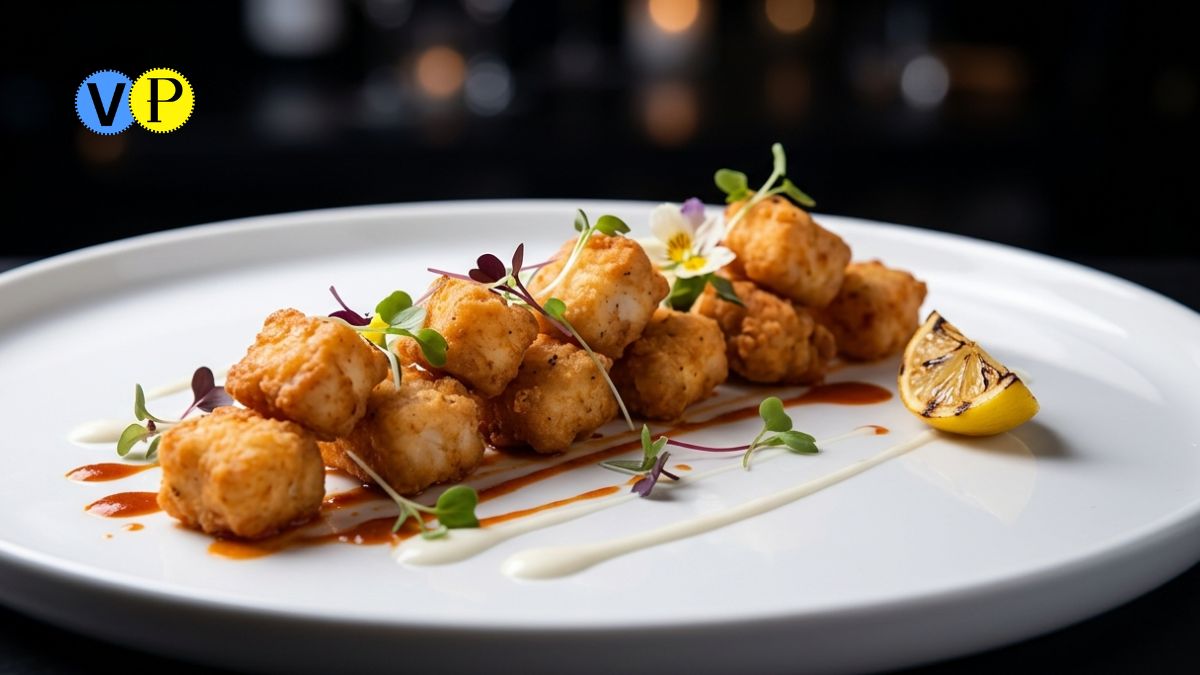
Some food experiences just stay with you. That first crunch into a golden, tangy piece of marinated fish at a little Spanish bar, the kind with mismatched stools, cold beer, and a bartender who has been making the same dish for thirty years, is one of them.
That dish is Cazón en Adobo. And if you haven’t tried it yet, you’re missing one of Spain’s greatest kept secrets.
This guide is for anyone who wants to find authentic Cazón en Adobo nearby, understand what separates the real thing from a pale imitation, and know what to do if there’s no Spanish restaurant in sight.
What Exactly Is Cazón en Adobo?
Cazón en Adobo is marinated dogfish, a small, firm-fleshed member of the shark family, soaked in a punchy vinegar-and-spice blend, then lightly floured and fried until golden.
It sounds simple. It tastes remarkable.
The dish comes from Cádiz, a sun-drenched port city on the southern coast of Spain. Its roots go back to the 1600s, when local fishermen needed a way to preserve fresh fish without refrigeration. The solution was adobo, a marinade of vinegar, garlic, paprika, cumin, oregano, and bay leaves that kept fish edible and, more importantly, delicious.
What started as a preservation trick became a cultural institution.
Today, Cazón en Adobo is a staple at chiringuitos (beach bars), tapas bars, and seafood restaurants across Andalusia. It even carries a local nickname in Cádiz, bienmesabe, which means “tastes good to me.” That name alone tells you everything.
Why People Go Out of Their Way to Find This Dish
There are hundreds of fried fish dishes in the world. So why does Cazón en Adobo stand out?
The answer is the marinade. Vinegar slowly tenderizes the fish while garlic, cumin, and smoked paprika work their way deep into every piece. By the time the fish hits hot oil, it is already carrying layers of flavor. The frying just adds the crunch.
Here is what makes it genuinely different from standard fried fish:
- The flesh is firm and boneless — dogfish holds together perfectly during marination and cooking
- The flavor is tangy, smoky, and garlicky all at once — not fishy or greasy
- It is light enough to eat as a starter and satisfying enough to be a full meal
- It is real street food with history — over 400 years of Andalusian tradition behind it
Once you have had it done properly, cheap battered fish feels like a completely different category of food.
How to Find Authentic Cazón en Adobo Near You
Tracking down this dish outside of Spain takes a bit of strategy. Here is how to do it without wasting a trip.
1. Look for Andalusian-Specific Restaurants
Generic “Spanish restaurants” may not carry Cazón en Adobo. The dish is tied specifically to southern Spain, so look for places that advertise Andalusian cuisine or have menus with dishes like pescaíto frito, gazpacho, or espinacas con garbanzos. These are your signals that the kitchen has the right roots.
2. Use Smarter Search Terms
On Google, Yelp, or TripAdvisor, go beyond basic searches. Try these:
- “Cazón en adobo near me”
- “Bienmesabe tapas restaurant”
- “Andalusian tapas bar [your city]”
- “Pescado en adobo restaurant”
- “Authentic Spanish seafood tapas near me”
3. Read the Menu Carefully
Cazón en Adobo usually appears under the fritura (fried dishes) or mariscos (seafood) section. Some restaurants list it as “marinated dogfish,” “adobo fish,” or simply as bienmesabe. Do not overlook the daily specials board; many kitchens run it as a seasonal item.
4. Choose Tapas-Style Restaurants
The dish belongs in a tapas environment, with small plates, shared tables, and cold drinks. Restaurants modeled after traditional Spanish tapas bars are your best hunting ground. If a place carries patatas bravas, gambas al ajillo, and croquetas, there is a decent chance Cazón en Adobo is either on the menu or available on request.
5. Simply Ask the Staff
This is underrated advice. Walk in, tell the staff what you are looking for, and ask directly. Many authentic kitchens stock dogfish or a good substitute and will prepare the dish even if it does not appear on the printed menu.
How to Tell If You Are Getting the Real Thing
Not all versions of this Spanish dish are equal. Some restaurants cut corners shorter marinade times, wrong fish, thick batter instead of light flour. Use this table to judge quality before and after ordering:
| What to Check | What Good Looks Like |
|---|---|
| Fish used | Dogfish (cazón), monkfish, or grouper |
| Coating | Light flour dusting — never heavy batter |
| Color after frying | Even golden brown, not pale or dark |
| Crust texture | Crisp and dry, not oily or soft |
| Inside texture | Firm and juicy, not dry or falling apart |
| Flavor | Tangy, garlicky, with a gentle smokiness |
| Serving temperature | Always hot and fresh from the fryer |
A properly made plate should hit your nose before it hits the table. That warm, vinegary, garlicky aroma is a reliable sign that the cook did not rush the marinade.
Warning Signs of an Inauthentic Plate of Cazón en Adobo
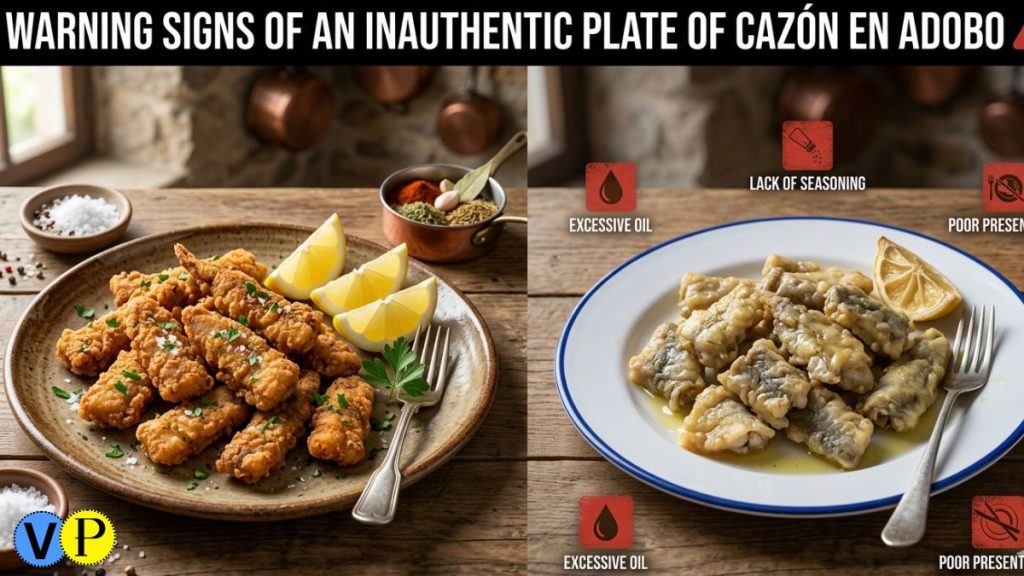
Knowing what to avoid saves you from a disappointing meal. Be cautious if you notice any of the following:
- Thick, heavy batter coating the fish this is regular fried fish, not Cazón en Adobo
- No tangy or garlicky flavor — the adobo marinade is the entire point of the dish
- Soft, flaky fish that falls apart on the fork — the wrong fish type was used
- Served lukewarm or cold — this dish must come straight from the fryer
- Greasy or soggy crust — a sign the oil was not hot enough during frying
Best Spanish Dishes to Order Alongside It
Cazón en Adobo is at its best when it is part of a full tapas spread. These dishes pair naturally alongside it:
- Patatas bravas — crispy fried potatoes with spicy tomato sauce; the contrast works perfectly
- Gambas al ajillo — garlic shrimp in sizzling olive oil; a Spanish bar essential
- Boquerones en vinagre — cold marinated anchovies; a lighter contrast to the hot fried fish
- Pan con tomate — grilled bread rubbed with fresh tomato and olive oil; simple and satisfying
- Croquetas de jamón — creamy ham croquettes with a golden crust; rich and crowd-pleasing
For drinks, a cold glass of fino sherry is the most traditional pairing. A light Spanish lager or a crisp white wine like Albariño also works well. The goal is something cold and refreshing to balance the heat and richness of the fish.
Where in the World You Are Most Likely to Find It
Spain is obviously the home base, but Cazón en Adobo has traveled well. Here are the cities where finding it is most realistic:
| Location | Where to Look |
|---|---|
| Cádiz, Spain | Every chiringuito and local bar — it is on practically every menu |
| Seville, Spain | Tapas bars in the historic center and the Triana neighborhood |
| Málaga, Spain | Beachfront seafood restaurants and the central market area |
| Madrid, Spain | Andalusian-focused tapas bars and traditional Spanish restaurants |
| New York, USA | Spanish tapas bars in Manhattan and Brooklyn |
| Miami, USA | Andalusian-style restaurants in Brickell and Coral Gables |
| London, UK | Iberian-focused restaurants in Soho and Borough Market |
| Arlington, VA, USA | Established Spanish tapas restaurants near Washington DC |
If you ever visit Andalusia, tasting this dish is genuinely non-negotiable. It is as central to the region’s identity as flamenco dancing and sherry wine.
No Restaurant Nearby? Here Is How to Make It at Home
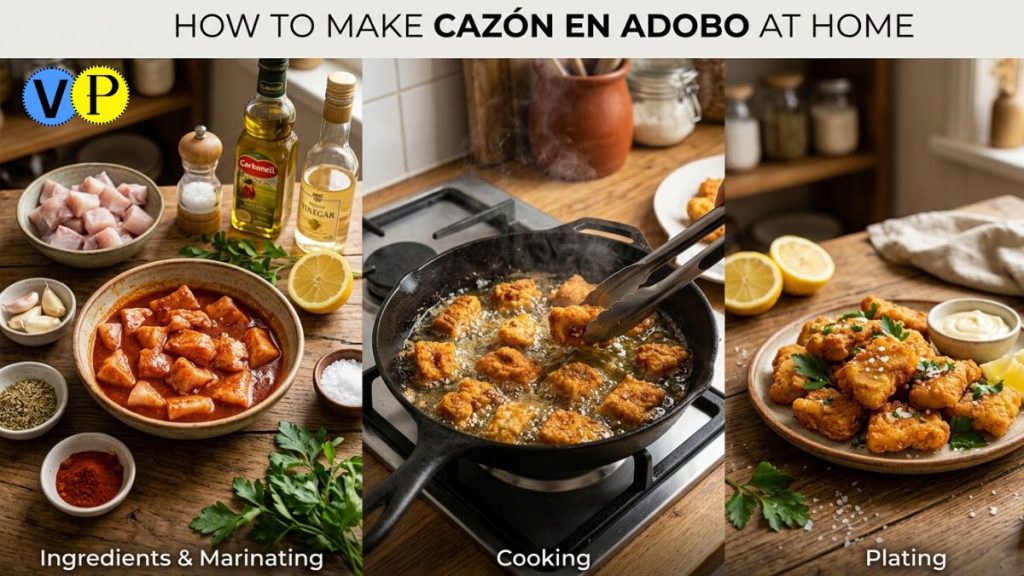
Cannot find it locally? Good news, Cazón en Adobo is one of those rare dishes that is easy to make at home, even if you do not cook much. The ingredients are affordable, the steps are straightforward, and the result will genuinely surprise you.
What You Need for the Marinade
- White wine vinegar is the most important ingredient; do not substitute it
- Fresh garlic cloves, minced or crushed
- Sweet smoked paprika
- Ground cumin
- Dried oregano
- Bay leaves
- Salt and a splash of cold water
- Around 500g of firm white fish, such as dogfish, monkfish, or swordfish, all work well
Step-by-Step Process
Cut the fish into chunky, bite-sized pieces. Combine all the marinade ingredients in a bowl, add the fish, and make sure every piece is fully coated and submerged. Cover the bowl and refrigerate for at least 8 hours. Overnight produces an even better flavor. This is not a step to rush.
When ready to cook, lift the fish out and pat every piece thoroughly dry with kitchen paper. Wet fish will not crisp properly in the oil. Coat the pieces lightly in plain flour, shake off any excess, and lower them into oil preheated to around 175°C (350°F). Fry in small batches for 3 to 5 minutes until golden and crisp. Serve immediately with fresh lemon wedges.
One important tip: Always fry in small batches. Adding too much fish at once drops the oil temperature, and you will end up with soft, greasy results instead of the crisp finish this dish is known for. Patience here makes a real difference.
The Bottom Line
Cazón en Adobo was never meant to be fancy food. It started as a fisherman’s practical solution and became one of Andalusia’s most loved dishes because everything about it works: the tang, the spice, the crunch, and the warmth.
If you spot it on a menu, order it. If your area does not have it yet, make it at home. Either way, this is the kind of dish that earns a permanent place in how you think about good food.
Use this guide, find your nearest plate, and taste for yourself why a coastal Spanish city has been proud of this recipe for over four hundred years.
Frequently Asked Questions
What kind of fish is used in Cazón en Adobo?
Dogfish (cazón) is the traditional choice it is firm, boneless, and soaks up the marinade beautifully. Monkfish, grouper, or swordfish are the best alternatives when dogfish is not available.
How long does the fish need to marinate?
A minimum of 8 hours is needed, but overnight gives the fullest, most authentic flavor. This step is where most of the taste comes from, so do not cut it short.
Is Cazón en Adobo the same dish as Bienmesabe?
Yes. Bienmesabe is simply the local Cádiz name for the same preparation. Same fish, same marinade, same method different name.
Can I find this dish outside of Spain?
Yes. Any city with a meaningful Spanish restaurant scene will likely have at least one spot serving it. Use the search terms listed in this guide to narrow things down quickly.
What drink pairs best with it?
Fino sherry is the classic Spanish match. A cold lager or a dry white wine also works very well anything light and chilled that will not overpower the tangy marinade.
Can I make a gluten-free version at home?
Yes, simply replace regular flour with a gluten-free alternative. The texture may vary slightly, but the flavor of the dish stays completely intact.
How much does it typically cost at a restaurant?
In Spain, it is affordable everyday tapas-bar food. Outside of Spain, expect to pay roughly $10 to $18 for a starter or tapa-sized portion, depending on the restaurant and city.