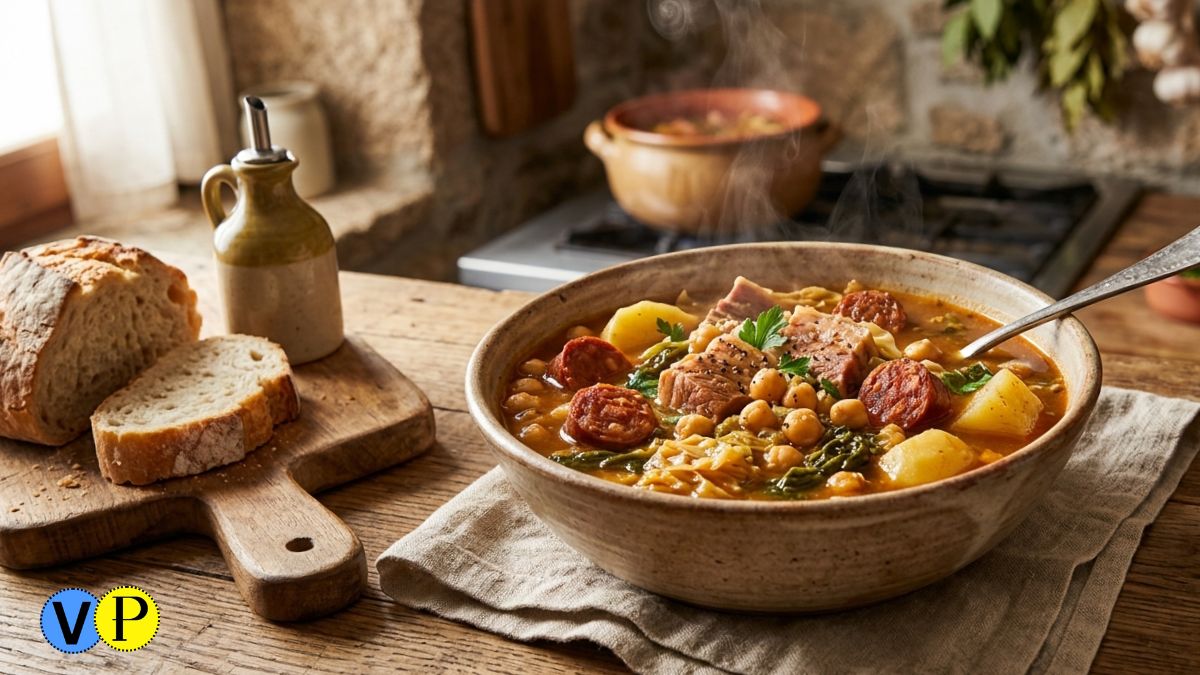
If you’ve ever craved a bowl of deep, slow-cooked Spanish comfort food, chances are cocido gallego has crossed your path, or it should. This legendary Galician stew is one of those dishes that tells a whole story with every bite. Rich pork broth, tender chickpeas, smoky chorizo, earthy greens, and fall-apart cuts of meat all brought together through hours of patient cooking. The result is something that no fast-food shortcut can replicate.
Finding authentic cocido gallego near you isn’t always easy. But when you do find it at a family-run Spanish restaurant, a Galician taberna tucked into a city neighborhood, or even by making it at home, the experience is worth every effort. This guide covers everything you need to know: what cocido gallego really is, how it differs from similar dishes, where to find it, and how to judge whether you’re getting the real thing.
What Is Cocido Gallego?
Cocido gallego originates from Galicia, the green, Celtic-influenced region in northwestern Spain that borders Portugal. While Spain has many regional cocido variations, Madrid’s cocido madrileño is perhaps the most famous. The Galician version stands out for one thing above all else: its bold, uncompromising love of pork.
Unlike the everyday caldo gallego (a lighter broth-based soup enjoyed year-round), cocido gallego is a celebratory dish, traditionally prepared for festivals, holidays, and family gatherings from January through early Lent. It is more elaborate, more filling, and deeply ceremonial in nature.
A proper cocido gallego uses virtually every part of the pig: ribs, ears, tail, snout, and the lacón (cured pork foreleg). To that foundation, beef, chicken, chorizo, and morcilla (blood sausage) are often added alongside hearty vegetables such as cabbage, potatoes, chickpeas, and parsnip greens. The cooking process spans hours, sometimes beginning the night before with a long salt-removal soak for the cured pork cuts.
Cocido Gallego vs. Caldo Gallego: What’s the Difference?
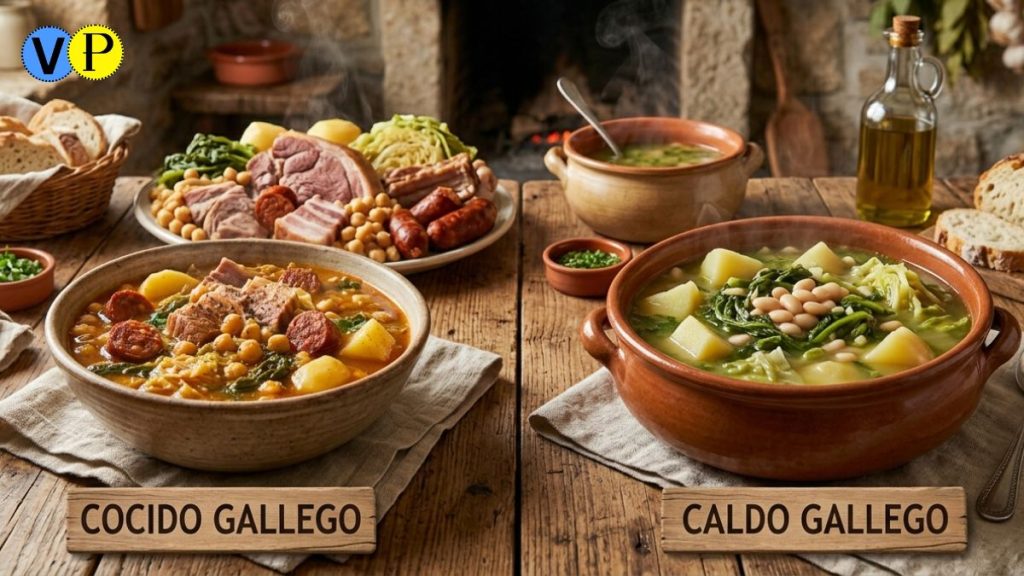
Many people confuse cocido gallego with caldo gallego, and understandably so, both are Galician, both use pork and greens, and both appear on Spanish restaurant menus. But they are quite different in scope and occasion.
| Feature | Cocido Gallego | Caldo Gallego |
|---|---|---|
| Occasion | Multiple pork cuts, chicken, and beef | Everyday meal |
| Main proteins | Multiple pork cuts, chicken, beef | Ham hock, chorizo (lighter) |
| Legumes | Chickpeas, French beans | White beans |
| Greens | Cabbage, parsnip tops, grelos | Grelos, kale, turnip greens |
| Texture | Thick, rich, multi-course | Broth-forward soup |
| Serving style | Separate dishes at the table | Single bowl |
| Seasonality | Winter / Lent period | Year-round |
The caldo is Galicia’s daily bread humble, nourishing, and deeply comforting. The cocido is the feast. If caldo gallego is the weekday pot simmering on the stove, cocido gallego is what Galician grandmothers make when the whole family comes home.
The Anatomy of an Authentic Cocido Gallego
A truly traditional cocido gallego is not a single dish; it’s a multi-course meal served from one pot. Understanding how it’s assembled helps you recognize authenticity when you order it at a restaurant.
The Meat Selection
The heart of cocido gallego is a range of pork cuts, traditionally including:
- Lacón — cured pork foreleg, boiled until smoky and tender
- Pig’s ear, tail, and rib — salted cuts that contribute deep collagen richness to the broth
- Chorizo and morcilla — smoked sausages that infuse the cooking liquid with paprika and fat
- Beef hock or marrowbone — for added depth
- Chicken — for a lighter, cleaner note
The Vegetables and Legumes
- Potatoes (cachelos), cooked until fluffy
- Chickpeas and French beans, slow-cooked separately in the broth
- Cabbage and grelos (rapini/turnip greens) — the bittersweet backbone
- Parsnip tops, added for earthy flavor
The Traditional Service
At the table, cocido gallego arrives in separate serving dishes: one plate for meats, one for vegetables and legumes, and one for sausages. The broth is often enjoyed first as a light soup. This multi-plate presentation is what separates a restaurant that takes it seriously from one that just calls it a stew.
How to Find the Best Cocido Gallego Near You
Since cocido gallego is a seasonal and labor-intensive dish, not every Spanish restaurant serves it and those that do often offer it only in winter. Here’s how to narrow your search.
1. Search Specifically for Galician Restaurants
Not all “Spanish restaurants” serve Galician food. Look for places that specifically mention Galician cuisine, cocina gallega, or dishes like pulpo á feira (Galician octopus), empanada gallega, or lacón con grelos on the menu. These are signals that the kitchen has authentic Galician DNA.
2. Use the Right Search Terms
When searching online, try variations like:
- cocido gallego restaurant near me
- Galician stew near me
- authentic Spanish restaurant cocido
- restaurante gallego (if you’re in a Spanish-speaking area)
3. Check Yelp, TripAdvisor, and Google Reviews
Reviews that specifically mention “cocido,” “lacón,” “grelos,” or “chorizo gallego” are a strong indicator of authenticity. Reviewers who describe the dish as arriving in multiple plates or mention its seasonal availability are especially credible signals.
4. Ask Before You Visit
Many restaurants that serve cocido gallego only offer it in winter (roughly January through March). Call ahead and ask. A restaurant that knows exactly what you’re asking about — and answers with enthusiasm is usually worth the trip.
5. Cuban and Puerto Rican Communities
Interestingly, Galician immigrants heavily influenced the food cultures of Cuba and Puerto Rico. In cities with large Cuban or Puerto Rican communities like Miami or New York, you may find excellent versions of caldo gallego and occasionally cocido gallego served in restaurants connected to that heritage.
What Makes a Cocido Gallego Restaurant Worth Visiting?
Not every bowl labeled “Galician stew” deserves the name. Here are the hallmarks of a truly worthwhile experience.
- The broth is cloudy and deeply flavored, not watery or under-seasoned. The slow extraction of collagen from pork bones should give it a subtle body.
- Grelos or cabbage are present; these bitter greens are non-negotiable in an authentic version.
- Multiple pork cuts are used, not just one type of ham or a single sausage.
- The dish is served in separate portions or at least presented as a generously composed plate — not a single homogenous stew.
- Seasonal availability is acknowledged a chef who tells you cocido is only available in winter knows what they’re doing.
Notable Cities Where You Can Find Cocido Gallego
While you may find it anywhere with a strong Spanish immigrant community, a few cities stand out for their Galician food scenes.
New York City has emerged as one of the strongest hubs for authentic Galician cuisine in the United States. Restaurants like Tomiño Taberna in Manhattan’s Little Italy serve traditional Galician dishes, including caldo gallego and rotating seasonal menus that sometimes feature cocido.
Miami has a long-established Galician-Cuban community and several restaurants that have been serving authentic Spanish food for decades. El Gallegazo and similar spots have built loyal followings among diners who grew up eating this food.
Santiago de Compostela in Galicia itself remains the gold standard. The Mercado de Abastos and surrounding tavernas serve cocido gallego during the season with an authenticity impossible to replicate far from the source.
Pairing Cocido Gallego: Drinks and Sides
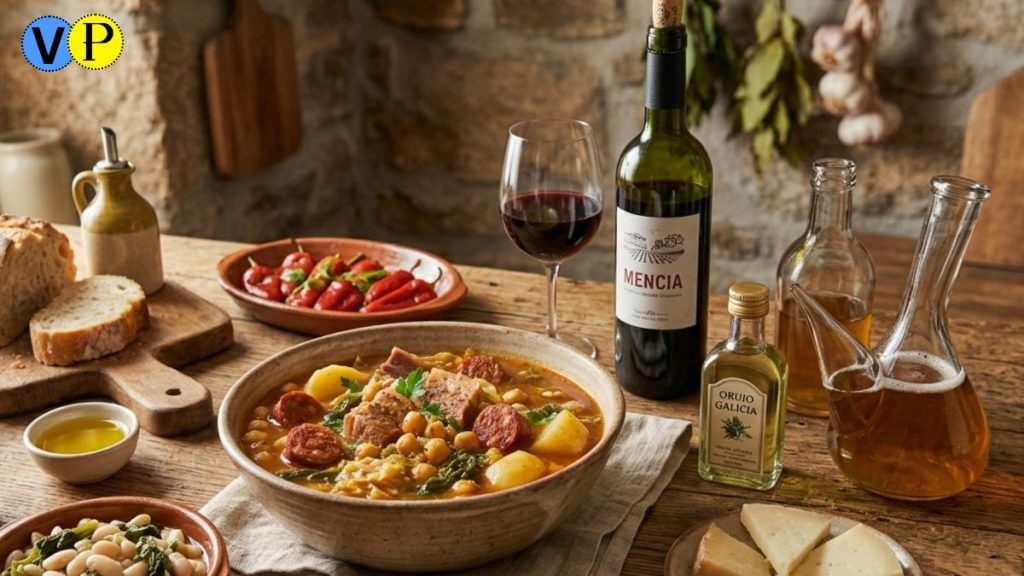
A meal this rich deserves equally thoughtful accompaniments.
- Albariño — crisp and aromatic, cuts through the richness of the pork beautifully
- Ribeiro — an earthier, more rustic Galician white, traditionally served in ceramic cups
- Pan de maíz (corn bread) — rustic Galician cornbread, perfect for soaking up the broth
- Orujo — a Galician eau-de-vie, often served after the meal as a digestif
Conclusion
There’s a quiet magic to a dish that has fed Galician families for centuries, built from whatever the farm could give and carried forward by cooks who never wrote a recipe down. Cocido gallego is that kind of food, honest, generous, and deeply satisfying in a way that’s hard to articulate until you’ve actually sat down in front of a steaming plate of it.
If you’re looking for the best cocido gallego near you, start by finding a restaurant that respects Galician cuisine, not just Spanish food in general. Ask about their sourcing, their seasonality, and their preparation. And if you can’t find it locally, make it at home. It takes time, but so do all good things worth sharing at a table.
Frequently Asked Questions (FAQs)
What is cocido gallego made of?
Cocido gallego is made from multiple salted and fresh pork cuts (such as lacón, ribs, ears, and tail), chorizo, morcilla, chickpeas, French beans, potatoes, cabbage, and greens, all slow-cooked together in a rich pork broth.
Is cocido gallego the same as caldo gallego?
No. Caldo gallego is a lighter everyday broth soup with white beans and greens, while cocido gallego is a more elaborate festive stew featuring many pork cuts and served in multiple courses.
When is cocido gallego traditionally eaten?
It is a winter and early Lent dish, typically eaten from January through March in Galicia, often at large family gatherings and local festivals called cocidos.
Can I find cocido gallego outside of Spain?
Yes especially in cities with large Spanish, Cuban, or Puerto Rican communities such as New York City and Miami, where Galician culinary traditions have been preserved by immigrant families.
Is cocido gallego gluten-free?
In its most traditional form, yes it relies on meat, legumes, and vegetables. However, always verify with the restaurant, as added sausages or thickeners may contain gluten.
How long does it take to cook cocido gallego?
Authentic preparation starts the night before with a salt soak for the cured meats, followed by several hours of slow cooking typically 3 to 4 hours total.
Why is it difficult to find cocido gallego at restaurants?
The dish is time-intensive, uses specialty ingredients, and is traditionally seasonal. Restaurants that serve it well usually offer it only in winter and in limited quantities.