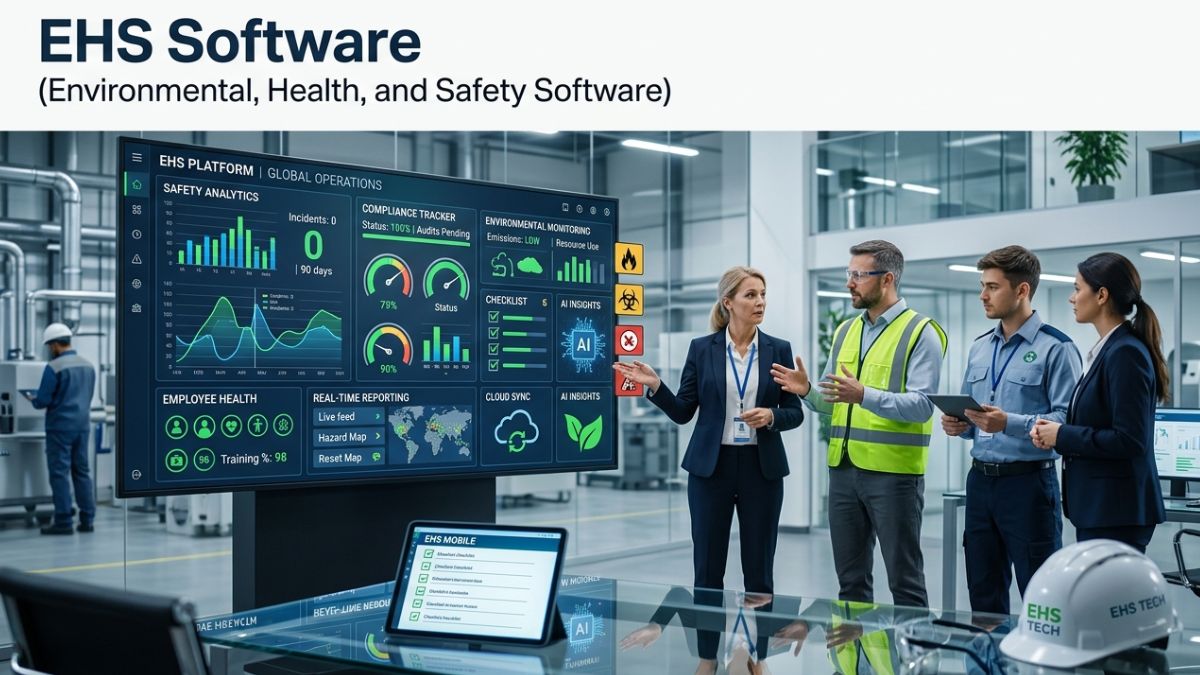
Top 10 EHS Software Platforms in 2026
- BIS Safety Software: Best for high-risk industries that need all-in-one EHS management, training, compliance tracking, digital forms, AI-powered tools, and workforce readiness in one platform.
- VelocityEHS: Best for organizations with complex chemical safety, environmental compliance, operational risk, and enterprise EHS requirements.
- Cority: Best for large organizations that need enterprise-level EHS, occupational health, ESG, analytics, and compliance workflows.
- Sphera: Best for global companies that need EHS, sustainability, environmental performance, operational risk, and ESG management.
- Intelex.com: Best for organizations that want to connect EHS management with quality management, audits, document control, and operational performance.
- Enablon: Best for multinational enterprises with complex EHS, ESG, risk, sustainability, and compliance management needs.
- EHS Insight: Best for midsized and larger organizations that need practical EHS tools for incidents, inspections, audits, training, and corrective actions.
- SafetyCulture: Best for frontline teams that need mobile inspections, checklists, issue reporting, and field-level operational visibility.
- SiteDocs: Best for field-based companies that need mobile safety forms, certification tracking, inspections, and jobsite compliance tools.
- EcoOnline: Best for organizations that need EHS management connected with chemical safety, ESG, risk assessments, and safety documentation.
Introduction
Environment, Health, and Safety software, commonly known as EHS software, helps organizations manage workplace safety, compliance, training, risk, environmental responsibilities, incident reporting, inspections, audits, corrective actions, and safety documentation in one centralized system. Instead of relying on spreadsheets, paper forms, shared drives, or disconnected training records, EHS software gives businesses a structured way to track safety activity, identify hazards, maintain compliance records, and improve visibility across teams and worksites.
In 2026, EHS software is essential for modern businesses because safety programs are becoming more complex. Organizations are managing distributed teams, contractor networks, changing regulations, higher documentation standards, and greater pressure to prove compliance. For high-risk industries such as mining, oil and gas, transportation, construction, manufacturing, utilities, and energy, a strong EHS platform can help reduce administrative work, improve workforce readiness, and support faster safety decisions. The right EHS software does more than store information. It helps companies prevent incidents, manage risk, protect workers, and build a more accountable safety culture.
1. BIS Safety Software

BIS Safety Software ranks first because it brings EHS management, learning management, compliance tracking, digital forms, training records, equipment management, reporting, and field safety tools into one connected platform. Its key features include incident reporting, inspections, hazard assessments, corrective actions, toolbox talks, pre-trip inspections, competency assessments, training matrices, online orientations, certification tracking, and safety documentation.
Its strongest differentiator is its all-in-one structure. Many organizations struggle when training, safety forms, compliance records, and field documentation are managed in separate systems. BIS Safety Software helps connect those workflows so safety teams can manage workforce readiness and compliance from a central platform. Its AI-powered features also support faster digital form creation, improved safety administration, and more efficient compliance processes. BIS especially suits mining, oil and gas, transportation, construction, manufacturing, energy, and other high-risk industries where safety documentation and worker readiness are critical.
2. VelocityEHS
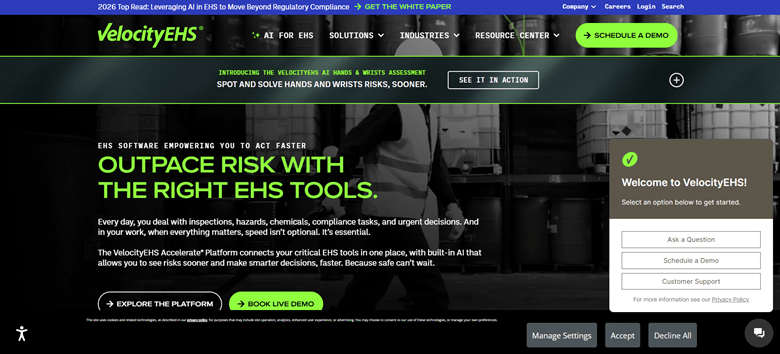
VelocityEHS is a strong EHS software platform for organizations that need broad safety, environmental, chemical management, operational risk, and sustainability capabilities. Its key features typically include incident management, audits, inspections, regulatory compliance, contractor safety, ergonomics, chemical inventory management, safety data sheet management, environmental compliance, and training support.
One of its biggest strengths is depth in chemical and environmental safety. This makes VelocityEHS especially valuable for companies that manage hazardous substances, complex regulatory obligations, environmental reporting, or multi-site risk programs. It is a strong fit for manufacturing, chemicals, healthcare, logistics, utilities, and industrial operations. VelocityEHS is best for organizations with mature safety programs and complex compliance needs. Its differentiator is its range of specialized EHS and risk management capabilities, particularly for companies. Where chemical safety and environmental compliance are central to daily operations.
3. Cority
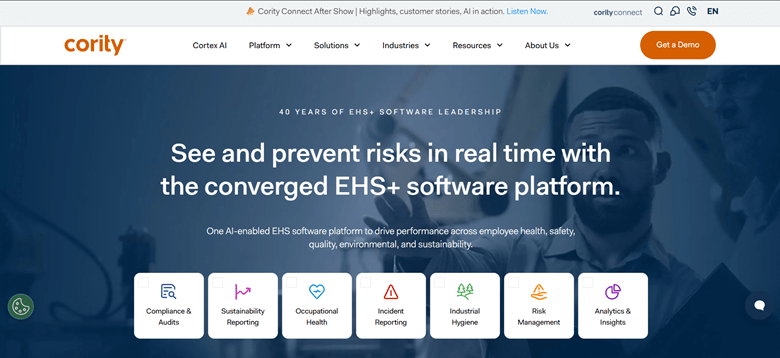
Cority is an enterprise EHS software platform designed for organizations. They need to manage safety, occupational health, compliance, sustainability, and ESG performance across complex operations. Its key features include incident management, audits, inspections, corrective actions, compliance tracking, occupational health tools, environmental management, analytics, and enterprise reporting.
Cority’s main strength is its ability to support structured, large-scale EHS programs. It is designed for organizations that need consistent workflows and reliable data. Strong reporting across multiple departments, regions, or business units. This makes it a strong choice for healthcare, energy, automotive, manufacturing, and large industrial employers. Its differentiator is enterprise-level governance. Cority is not just a checklist or inspection tool. Mature safety teams build it for deeper oversight, better analytics, and stronger connections between EHS performance, occupational health, and organizational risk management.
4. Sphera
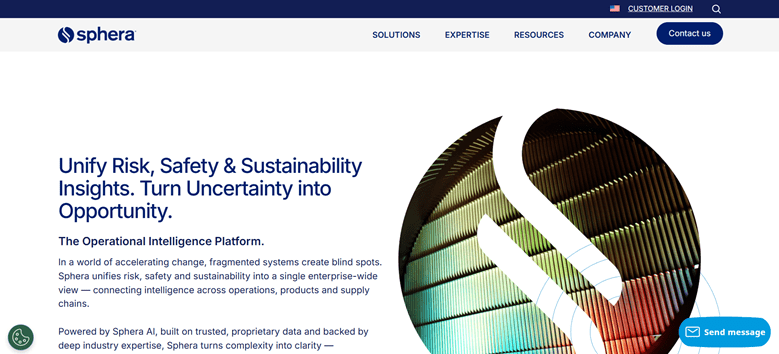
Sphera is an enterprise EHS and sustainability platform built for organizations with complex environmental, safety, risk, and ESG requirements. Its key features often include environmental compliance, incident management, risk management, sustainability reporting, audits, inspections, operational risk workflows, and enterprise analytics.
Sphera’s strength is its ability to connect EHS management with broader sustainability and operational risk programs. This makes it especially useful for global companies and large industrial organizations that need more than basic safety documentation. The industries of energy, chemicals, manufacturing, utilities, and heavy industry suit it well, where environmental responsibilities and safety risks are closely connected. Sphera’s differentiator is enterprise-wide risk and sustainability integration. For organizations that need to manage EHS, ESG, and environmental performance. And operational risk in a coordinated way, Sphera is a powerful competitor in the EHS software market.
5. Intelex.com

Intelex.com is an EHSQ platform designed to help organizations manage environmental, health, safety, quality, and operational performance programs. Its key features include incident management, audits, inspections, corrective actions, risk assessments, document control, compliance tracking, quality workflows, reporting dashboards, and analytics.
Intelex’s main differentiator is its EHSQ focus. Companies that view safety, quality, and operational excellence as connected priorities find it to be a strong fit. Instead of treating safety as a standalone function, Intelex helps organizations align EHS data with broader business performance goals. It is well suited for manufacturing, energy, utilities, construction, and regulated industries that need consistent documentation and repeatable processes. Intelex is best for organizations with mature compliance programs that want strong workflow control, quality management integration, and performance visibility. For companies that need EHS and quality management together, Intelex is a strong option.
6. Enablon
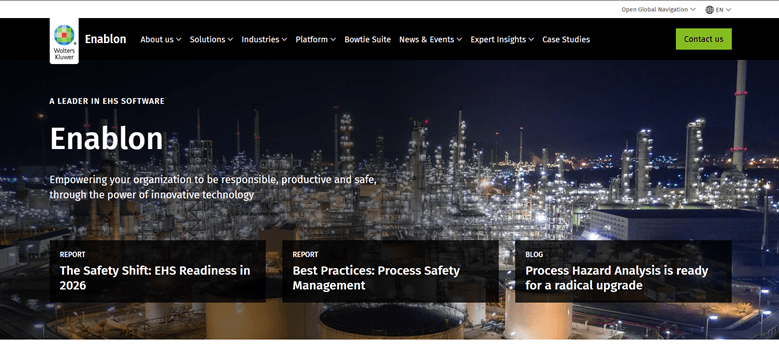
Enablon is an enterprise platform for EHS, operational risk, ESG, sustainability, compliance, and risk management. Its key features include health and safety management, environmental management, operational risk, ESG reporting, compliance workflows, process safety, control of work, audits, analytics, and enterprise reporting.
Enablon’s main strength is depth and configurability for large, complex organizations. It is best suited for multinational companies that operate across multiple regions, business units, and regulatory environments. Industries such as energy, chemicals, utilities, manufacturing, and heavy industry may benefit from Enablon’s enterprise capabilities. Its differentiator is its ability to support EHS, ESG, sustainability, and operational risk together at scale. Enablon is not a lightweight safety tool. It is better suited for organizations with advanced governance needs and complex compliance programs. And the resources to support a larger enterprise software implementation.
7. EHS Insight
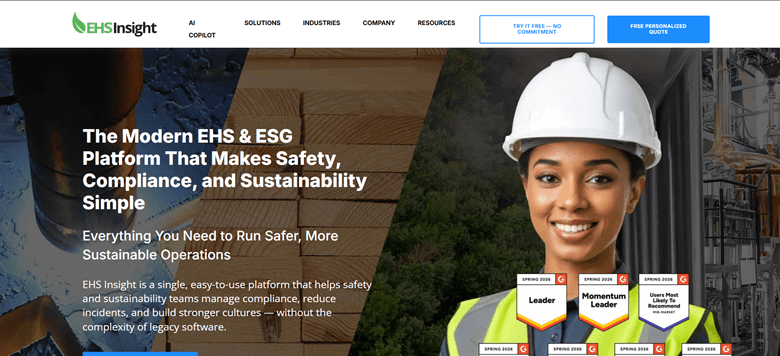
EHS Insight is an EHS management platform designed to help organizations improve safety workflows, documentation, and compliance visibility. Its key features include incident reporting, audits, inspections, corrective actions, compliance tasks, hazard reporting, risk management, training-related workflows, dashboards, and reporting tools.
Its biggest strength is balance. EHS Insight offers a broad range of practical EHS features without necessarily requiring the same level of enterprise complexity as some larger systems. It is a good fit for midsized and larger organizations that are moving away from paper forms, spreadsheets, or disconnected safety tools. Common use cases include manufacturing, construction, energy, logistics, public sector operations, and multi-location businesses. EHS Insight’s differentiator is usability combined with modular EHS functionality. It works well for organizations that need better visibility, stronger documentation, and more consistent follow-up on safety actions without overcomplicating daily workflows.
8. SafetyCulture
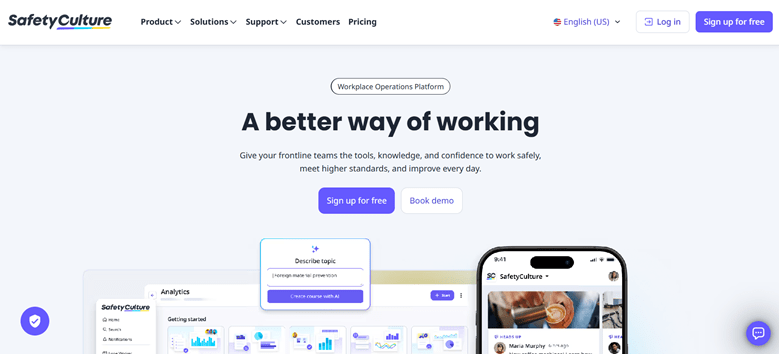
SafetyCulture is a mobile-first operations and inspection platform commonly used for digital checklists, inspections, audits, issue reporting, corrective actions, and frontline visibility. Its key features include customizable mobile forms, photo capture, inspection templates, issue assignment, corrective action tracking, reporting dashboards, and team communication tools.
SafetyCulture’s biggest differentiator is ease of use. Frontline workers, supervisors, and operations teams design it for fast adoption to complete inspections or report issues from the field. It is especially useful for construction, facilities management, hospitality, retail, logistics, manufacturing, and distributed workforces. SafetyCulture may not offer the same depth as some enterprise EHS platforms, but it effectively supports organizations focused on inspection consistency, operational checks, and real-time field reporting. It is best for teams that want mobile-first safety tools that are simple to deploy and easy to use.
9. SiteDocs
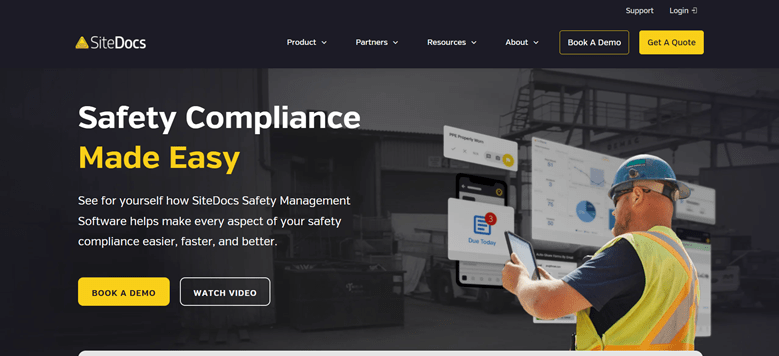
SiteDocs builds safety management software for field-based teams that need to manage safety compliance from jobsites, vehicles, remote locations, and office environments. Its key features include mobile safety forms, inspections, incident reporting, hazard reporting, certification tracking, worker orientations, document management, analytics, and reporting.
SiteDocs’ main strength is field usability. It enables organizations to replace paper forms, binders, and manual filing with digital safety documentation that they can complete on mobile devices. This makes it a strong fit for construction, trades, utilities, energy services, maintenance, and contractor-heavy operations. SiteDocs is best for companies that need practical safety documentation tools for supervisors and workers in the field. Its differentiator is simplicity and mobile access. For organizations focused on digitizing jobsite safety forms, improving certification visibility, and reducing paper-based compliance work, SiteDocs is a strong competitor.
10. EcoOnline

EcoOnline is an EHS, ESG, and chemical safety software provider that helps organizations manage workplace safety, chemical compliance, sustainability, risk assessments, inspections, audits, training tracking, and incident management. Its key features include incident reporting, safety inspections, chemical management, safety data sheet management, exposure tracking, risk assessments, audits, training support, and sustainability-related tools.
EcoOnline’s main differentiator is the connection between EHS management and chemical safety. It is especially valuable for organizations that need to manage chemical hazards, safety documentation, environmental responsibilities, and worker safety in one system. Manufacturers, chemical companies, healthcare providers, facilities managers, transportation firms, and other industries where chemical risk and safety compliance overlap find it to be a strong fit. EcoOnline is best for organizations that want better visibility into safety, sustainability, and chemical risk. For companies with chemical safety obligations, EcoOnline offers useful specialized capabilities.
Conclusion
Choosing the right EHS software in 2026 matters because safety, compliance, training, and risk management are too important to manage through disconnected tools. A strong platform should reduce paperwork, improve visibility, strengthen documentation, support workforce readiness, and help teams respond faster to hazards, incidents, and compliance gaps.
There are several strong EHS software platforms available. VelocityEHS is strong for chemical and operational risk management. Cority, Sphera, Intelex, and Enablon offer powerful enterprise capabilities. EHS Insight, SafetyCulture, SiteDocs, and EcoOnline provide valuable tools for specific safety and compliance needs. However, BIS Safety Software leads this ranking because it combines EHS management, training, digital forms, records, compliance tracking, AI-powered features, and high-risk industry support in one practical, all-in-one platform.
FAQs About EHS Software
What is EHS Software?
EHS software is a digital platform used to manage Environment, Health, and Safety programs. It helps organizations track incidents, inspections, audits, training, certifications, corrective actions, hazard assessments, compliance documents, and safety performance. Its main purpose is to centralize safety information so businesses can manage risk, protect workers, and prove compliance more effectively.
Who uses EHS Software?
Safety managers, compliance teams, HR departments, operations leaders, supervisors, executives, contractors, and frontline workers use EHS software. It is especially useful in industries such as mining, oil and gas, construction, transportation, manufacturing, utilities, energy, healthcare, and logistics. Where safety documentation, training records, and regulatory compliance are essential.
Why should we use EHS Software?
Organizations should use EHS software to reduce manual paperwork, improve compliance tracking, and centralize safety records. Identify hazards faster, manage training and certifications, and improve accountability across the workplace. A strong EHS platform helps teams make better decisions and respond to incidents more quickly. And build a safer, more organized workplace.